
Medically reviewed by Dr Dhivian, MBBS, MMed (Family Medicine), Accredited Family Physician, Angsana Medical
The short answer
GLP-1 is a natural gut hormone that signals fullness after you eat. GLP-1 medications are prescription injections that copy this hormone, helping you feel full sooner and crave less. They work best with diet and lifestyle changes, under a doctor's care.
What is GLP-1, the natural gut hormone?
GLP-1 stands for glucagon-like peptide-1. It is a hormone that your own body makes, released mainly by cells in your small intestine. You can think of it as one of the messengers your gut sends out whenever food arrives. It is not a drug or a supplement. It is a normal part of how the body manages eating and blood sugar, and everyone produces it.
So what does GLP-1 actually do once you have eaten? It works in a few connected ways. First, it nudges the pancreas to release insulin at the right moment, which helps move sugar out of the bloodstream and into the cells that use it for energy. Second, it tells the brain that you have had enough to eat, which is part of why a meal eventually feels satisfying rather than endless. Third, it slows down how quickly the stomach empties its contents into the intestine, so food stays with you for longer and hunger takes more time to return.
Put together, these signals are one reason a normal meal makes you feel comfortably full and then gradually hungry again over the following hours. The system is finely tuned, and it runs quietly in the background without you noticing it.
For many people living with excess weight, this natural appetite signalling can feel weaker than they would like. Hunger returns quickly, portions never seem quite enough, and cravings are hard to ignore. This is rarely about willpower alone. Appetite is driven by hormones, sleep, stress, genetics and the food environment around us, and these forces can work against even very disciplined people. Understanding GLP-1 helps explain why appetite is so much more than a matter of trying harder, and it sets the scene for understanding the medications that are now being talked about so widely.
How GLP-1 medications work
The medications people refer to as the new weight-loss injections belong to a class called GLP-1 receptor agonists. The phrase sounds technical, but the idea is simple. A receptor is a docking point on a cell, and an agonist is something that fits that docking point and switches it on. So a GLP-1 receptor agonist is a medication designed to fit the same docking points as your natural GLP-1 hormone and produce a similar effect, in a stronger and longer-lasting way.
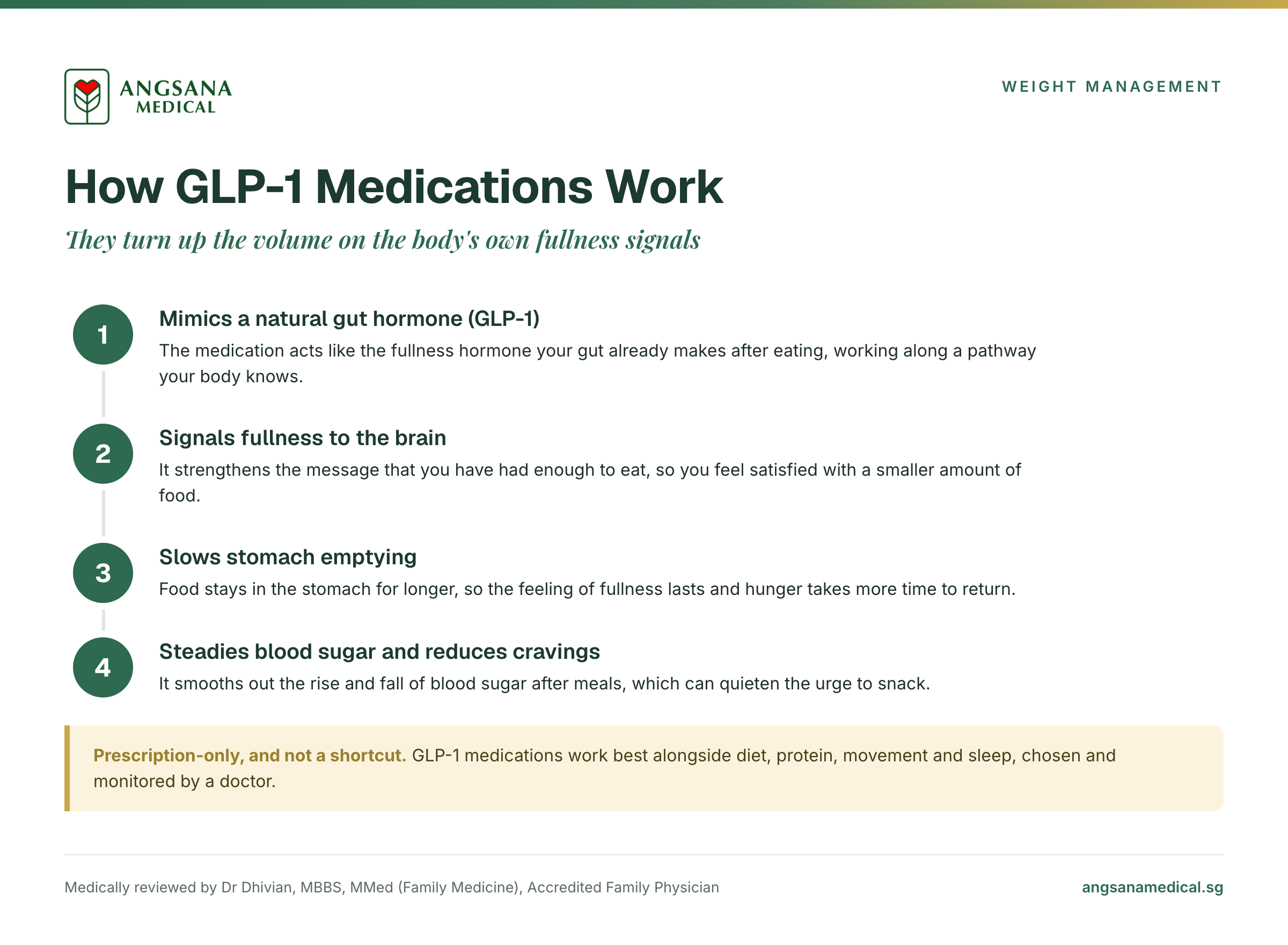
In practice, that means these medications turn up the volume on the body's own fullness signals. Rather than introducing something foreign that the body has never seen, they work along a pathway your body already uses every day. Here is what that looks like, step by step.
- 1. Mimics a natural gut hormone (GLP-1). The medication acts like the fullness hormone your gut already makes after eating, working along a pathway your body knows.
- 2. Signals fullness to the brain. It strengthens the message that you have had enough to eat, so you feel satisfied with a smaller amount of food.
- 3. Slows stomach emptying. Food stays in the stomach for longer, so the feeling of fullness lasts and hunger takes more time to return.
- 4. Steadies blood sugar and reduces cravings. It helps smooth out the rise and fall of blood sugar after meals, which can quieten the urge to snack and reduce cravings.
The combined result is that many people simply feel hungry less often and feel full sooner. Portions that once felt small start to feel adequate, and the constant background pull towards snacks tends to fade. This is the mechanism behind the appetite changes people describe.
It is worth being clear about what these medications are and are not. They are prescription-only medications. They are taken orally or given by injection, usually daily or weekly, and the dose is typically started low and increased gradually so the body can adjust. They are not a quick fix taken once, and the specific medication and dose are chosen for the individual by a doctor after assessment.
These medications belong to a class called GLP-1 receptor agonists, and some of the newer options in this class also act on an additional gut hormone pathway called GIP (glucose-dependent insulinotropic polypeptide), which further helps to regulate metabolism.
What results are realistic, and why it is not a shortcut
It is easy to read the headlines and assume GLP-1 medications are a magic switch. They are not. They are a tool, and like any tool, the outcome depends on how, and alongside what, they are used. Results vary a great deal from person to person, which is why honest medical guidance avoids promising any particular number on the scale.
The most important point is that these medications work best as one part of a wider plan, not as a replacement for it. They make it easier to eat less by reducing appetite, but they do not, on their own, build the habits that protect your health and help you hold on to progress. That is where the rest of the plan matters.
When appetite drops, eating well becomes even more important, not less. Eating fewer calories while neglecting protein can mean losing muscle along with fat, which is not the goal. A sensible plan prioritises adequate protein, enough fibre and a balanced intake so that the weight you lose is the right kind of weight. This is one reason structured dietary support is so valuable, and at Angsana our dietitian and nutritionist support is built around exactly this kind of practical, sustainable eating.
Movement matters too, and resistance exercise in particular. Activities that load the muscles, such as bodyweight work, resistance bands or weights, help preserve and build muscle during weight loss. This is why we provide the option of personal fitness training for all our weight loss patients, catered to your individual fitness level and pre-existing health conditions. Sleep is the quiet partner that is often overlooked. Poor sleep raises appetite and cravings the next day, working against the very effect the medication is trying to support. Managing stress sits in the same category, because stress and emotional eating can quietly undo good intentions.
None of this means the medication does not help. It means the medication helps most when it is supporting a plan rather than carrying it alone. There is also the question of safety and suitability, which we look at next, and the simple fact that ongoing medical supervision lets a doctor adjust the approach as your body responds. Weight is complex, and a thoughtful plan treats it that way.
Side effects and who should be cautious
Like all medications, GLP-1 receptor agonists can cause side effects, and it is fair to expect them rather than to be surprised by them. The most common effects are related to the gut, which makes sense given that slowing the stomach is part of how the class works. People may report nausea, a feeling of fullness, bloating, mild stomach discomfort, constipation or diarrhoea. These tend to be most noticeable in the first weeks of treatment or shortly after a dose is increased, and for many people they settle over time as the body adjusts.
Starting at a low dose and increasing it slowly is one way doctors try to reduce these early effects. Simple measures, such as eating smaller meals and avoiding very rich or greasy food, can also help while the body adapts. Less common side effects exist as well, and some are more serious, which is precisely why a medical assessment beforehand and monitoring during treatment are not optional extras. They are part of using this class of medication responsibly.
Just as importantly, GLP-1 medications are not suitable for everyone. Certain personal or family medical histories, some existing health conditions, pregnancy and breastfeeding, and the use of certain other medications can all affect whether this class is appropriate for a given individual. None of this can be judged from a simple quiz or website. It needs a proper conversation with a doctor who can review your history, your current medications and your goals, and who can explain the trade-offs in your particular situation. This is also why these medications should never be bought from unregulated sources online or shared between friends or family members.
A common question is what happens if you stop. Because the medication works while it is in your system, its appetite-reducing effect fades once it is stopped. If eating patterns and lifestyle have not changed in the meantime, appetite, and often weight, can return. That is not a failure of the medication. It is a reminder that it manages appetite rather than permanently changing the body, which again points back to the value of building lasting habits and staying under medical guidance throughout.
 A plain, unbranded injector pen and tablets, the two forms GLP-1 receptor agonist medications are prescribed in.
How a doctor-led weight programme uses GLP-1
Given everything above, the sensible way to consider a GLP-1 medication is within a doctor-led programme rather than as a standalone purchase. A structured programme is designed to answer the questions that matter before anyone reaches for a prescription, and to keep answering them as treatment goes on.
It usually begins with a proper assessment. A doctor reviews your medical history, current medications, weight history and goals, and may arrange relevant checks. From there, the conversation is about whether a GLP-1 medication is appropriate for you at all, and if so, which medication and dose fit your situation. This is the point where the specific medication is selected for the individual in consultation, rather than chosen from an advertisement.
A good programme then surrounds the medication with the support that makes it work. That means a personalised plan covering nutrition, protein, movement and sleep, with practical dietitian input rather than vague advice. It means regular monitoring, so the doctor can track how you are responding, manage any side effects, and adjust the plan as your needs change over weeks and months. It also means an honest discussion about the long term, including what a maintenance phase might look like and how to protect your progress.
At Angsana Medical, this is the approach behind our doctor-led weight management programme, which brings medical assessment, personalised planning, dietitian support and ongoing monitoring together rather than treating a prescription as the whole answer. Because weight and metabolic health connect to so much else, our family doctor team can also look at the wider picture, from blood pressure to blood sugar, as part of your overall care.
If you have been reading about GLP-1 and wondering whether it could be right for you, the most useful next step is not a search engine. It is a conversation with a doctor who can assess your situation properly and explain your options clearly.
Thinking about a doctor-led approach to weight?
Our doctors can assess whether a GLP-1 medication is suitable for you and build a personalised plan around your health, your goals and your lifestyle. Speak with us to find out what makes sense for your situation.
Frequently Asked Questions About GLP-1 Weight Loss
What is GLP-1 in simple terms?
GLP-1 is a natural hormone your gut releases after you eat. It tells your brain you are full, slows how fast your stomach empties, and helps keep your blood sugar steady. GLP-1 medications are prescription injections that copy the action of this natural hormone. They belong to a class called GLP-1 receptor agonists and are always prescribed and monitored by a doctor.
How does GLP-1 help with weight loss?
GLP-1 receptor agonists mimic the body's own fullness hormone, so you feel satisfied sooner and stay full for longer. They also slow stomach emptying and reduce food cravings. With smaller portions and fewer cravings, many people eat less, which can support weight loss when combined with diet and lifestyle changes under medical supervision.
What are the side effects of GLP-1 medications?
The most common side effects of GLP-1 medications are gut-related, such as nausea, a feeling of fullness, bloating, constipation or diarrhoea, especially in the early weeks or after a dose increase. These often ease over time. Less common effects exist, and these medications are not suitable for everyone, so a doctor should assess you first and monitor you during treatment.
Are GLP-1 medications safe?
GLP-1 receptor agonists are prescription-only medications that must be assessed and prescribed by a doctor. They are not appropriate for everyone, and certain personal or family medical histories may make them unsuitable. Safety depends on the right candidate, the right dose, and proper monitoring, which is why these medications should never be sourced or used without medical supervision. When used under proper guidance, they can be a safe means to achieve weight loss.
Do you regain weight when you stop GLP-1?
Weight can return after stopping GLP-1 medications, particularly if eating habits and lifestyle have not changed. The medication reduces appetite while you take it, but it does not permanently reset your body. This is why a doctor-led plan focuses on building sustainable diet, protein, exercise and sleep habits alongside the medication, so any progress is easier to maintain over the long term.